The Beauty of Handcrafted African Furniture: Why Craft Still Matters
Discover the story behind handcrafted African furniture — where tradition, artistry, and modern design meet. Learn why handmade pieces bring soul, quality, and lasting beauty into contemporary homes.
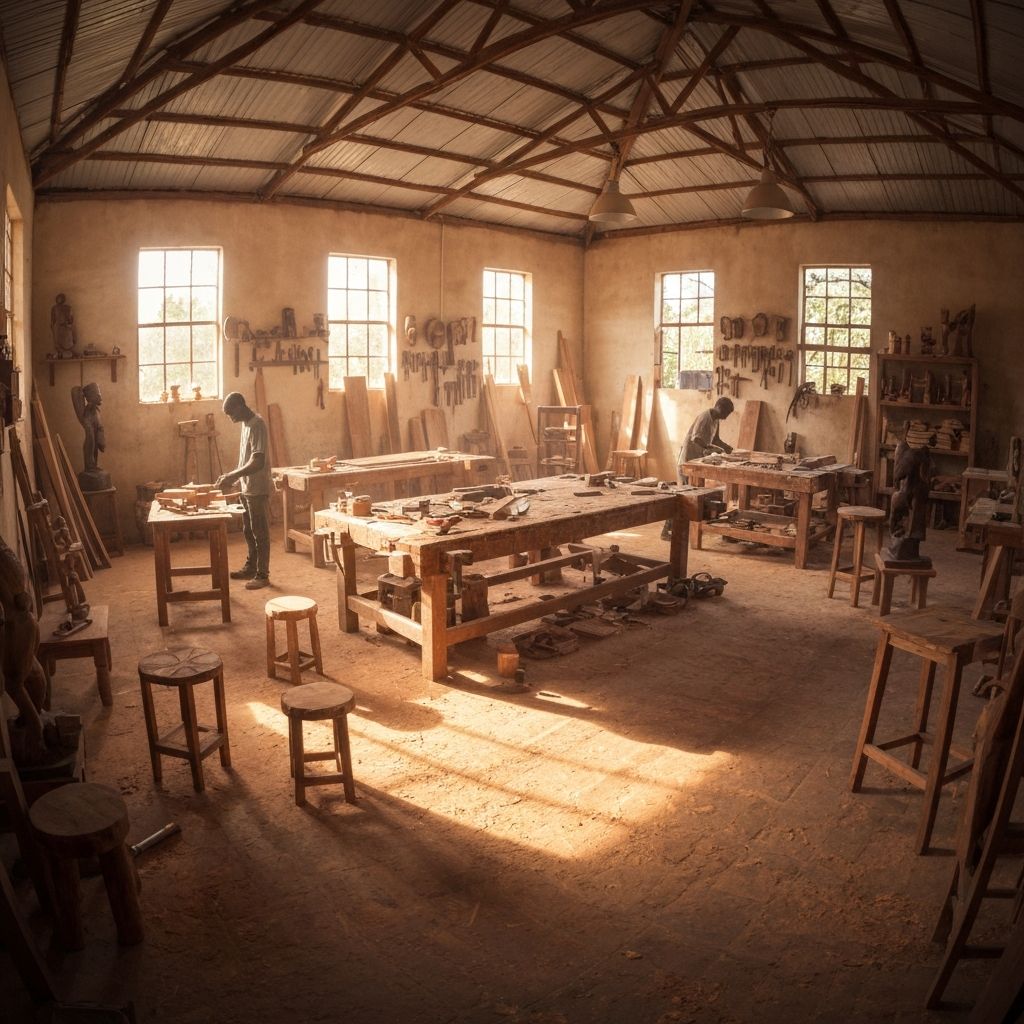
The Return to Meaningful Living Across the world, homes are changing. Interiors are no longer just about decoration — they are about identity, values, and connection. People are seeking spaces that feel authentic, grounded, and human. In this shift, handcrafted furniture has found renewed relevance. Pieces made slowly, by skilled hands, carry a presence that mass-produced items simply cannot replicate. They feel alive with intention, history, and care. In Africa, this tradition of making has never disappeared. It has evolved quietly through generations of artisans who shape wood, weave fibers, carve patterns, and construct forms rooted in both heritage and innovation. At Kamara , we believe these objects are not just furniture. They are cultural expressions — and they deserve a place in contemporary homes around the world. Craftsmanship as Cultural Memory Handcraft is more than a technique. It is a language passed from maker to maker. A carved detail may echo tribal geometry. A joinery method may follow decades-old workshop practice. A woven texture may reference regional materials and climate. These elements carry cultural memory. They embed place and identity into physical form. Unlike factory production, where uniformity is the goal, handcrafted furniture preserves variation — the subtle differences that make each piece singular. These nuances are not imperfections; they are signatures of the human hand. Owning such a piece means bringing a fragment of living heritage into the home. Why Handmade Furniture Lasts Longer There is also a practical truth: handcrafted furniture is often built differently. Artisans typically work with solid materials, repairable construction methods, and durable finishes. Pieces are designed to be used, restored, and passed on. Mass production optimizes for speed and cost. Craft optimizes for longevity and integrity. This difference becomes clear over time. Handmade furniture ages with character. Machine-made furniture often ages with damage. The distinction is not only aesthetic — it is structural. Because joints can be repaired and surfaces refinished, handmade furniture rarely reaches a true end-of-life. It evolves instead — adapting across decades and even generations. The Soul of Natural Materials African furniture traditions are deeply connected to natural materials. Hardwoods, woven grasses, leather, clay, and stone are chosen not only for availability but for performance in local climates. These materials breathe. They respond to humidity, temperature, and use. They develop patina. They soften or deepen in tone. This living quality is what gives handcrafted pieces warmth. They never feel sterile or synthetic. Instead, they create tactile richness — surfaces that invite touch and engagement. In modern interiors, where concrete, glass, and metal dominate, this organic presence brings balance. It introduces visual calm and sensory depth that manufactured materials rarely achieve. Modern Design Meets Ancestral Technique One of the most exciting aspects of contemporary African furniture is its fusion of old and new. Today’s artisans are not only preserving tradition; they are reinterpreting it. Clean silhouettes meet traditional carving. Minimalist forms integrate woven structure. Architectural geometry blends with organic texture. The result is a design language that feels both rooted and current — distinctly African yet globally relevant. This intersection is precisely where Kamara curates: pieces that honor heritage while fitting seamlessly into modern homes. Rather than treating craft as rustic or nostalgic, contemporary African makers position it as refined and architectural — capable of standing beside global design movements with confidence. Supporting Artisans, Sustaining Communities Choosing handcrafted furniture has impact beyond aesthetics. It supports real makers and their workshops. Artisan economies rely on skill, reputation, and continuity. When craft is valued, knowledge is preserved and livelihoods remain viable. Each purchase contributes to sustaining these creative ecosystems — ensuring techniques survive and evolve rather than disappear under industrial pressure. In this sense, handcrafted furniture is also a form of cultural stewardship. Buyers become participants in preservation, not just consumers of objects. This relationship between maker and owner creates a quieter but deeper connection than anonymous retail supply chains ever could. Creating Homes with Story A home furnished entirely with anonymous mass-produced items can feel visually complete yet emotionally neutral. Introducing handcrafted pieces changes that atmosphere. Suddenly there is narrative: Who made this? Where does it come from? What material is this? How was it shaped? These questions transform objects into conversation, memory, and meaning. Homes begin to reflect journeys and values rather than catalog pages. Over time, these objects accumulate personal history as well — marks of use, patina from light, and association with moments of life. The Kamara Perspective Kamara was created to elevate African craftsmanship within contemporary living. We work with verified artisans whose work embodies skill, integrity, and design clarity. Each piece is selected for material quality, construction, and visual presence — but also for authenticity. Our goal is not simply to sell furniture. It is to connect people with objects that carry human touch and cultural depth. In a world increasingly defined by speed and sameness, handcrafted African furniture offers something rare: individuality with heritage, beauty with substance, and design with soul. By bringing these works into curated digital space, Kamara enables African craft to reach modern audiences without losing its origin or integrity. Living with Craft Bringing handcrafted furniture into the home is not about adopting a style. It is about embracing a philosophy — one that values material honesty, maker identity, and enduring design. These pieces do not follow trends. They outlast them. They do not imitate culture. They embody it. And over years of use, they become part of personal history as well — gathering marks, memories, and meaning. That is the quiet power of craft. It connects past makers, present homes, and future stories through objects shaped by human hands. At Kamara , we continue to celebrate and curate handcrafted African furniture that carries this spirit — pieces shaped by human hands, rooted in heritage, and made to live with you for years to come.